


There are many situations where video surveillance feels necessary, but technically complicated or even impossible. For example, you are building a house, but there is no internet or electricity yet. At the same time, expensive materials and tools are on the construction site. Or you have a summer house where you don’t plan to install a permanent connection. Or perhaps a boat, yacht, or other valuable property located in a place where running cables simply isn’t realistic.
In such situations, it often feels like proper video surveillance just isn’t possible. You either accept the risk or try to find complicated solutions that don’t really deliver the desired result. In reality, that’s no longer the case. Today, there are cameras specifically designed for exactly these conditions.
How does this solution work?
The principle is quite simple. The camera does not require an internet cable or a permanent power connection. Internet access comes via a 4G network, just like on a smartphone — a SIM card is all that’s needed. Power comes from a built-in battery, which is charged by a solar panel.
This means the camera can operate completely independently. You install it in a suitable location, insert a SIM card, connect the solar panel — and the system is ready to go. No need to run cables, no need to drill into walls, and installation takes very little time.
Such a solution is especially suitable for temporary locations like construction sites, but it works just as well in places where running cables is simply not desired.
Which cameras are suitable for this?
Imou AOV PT
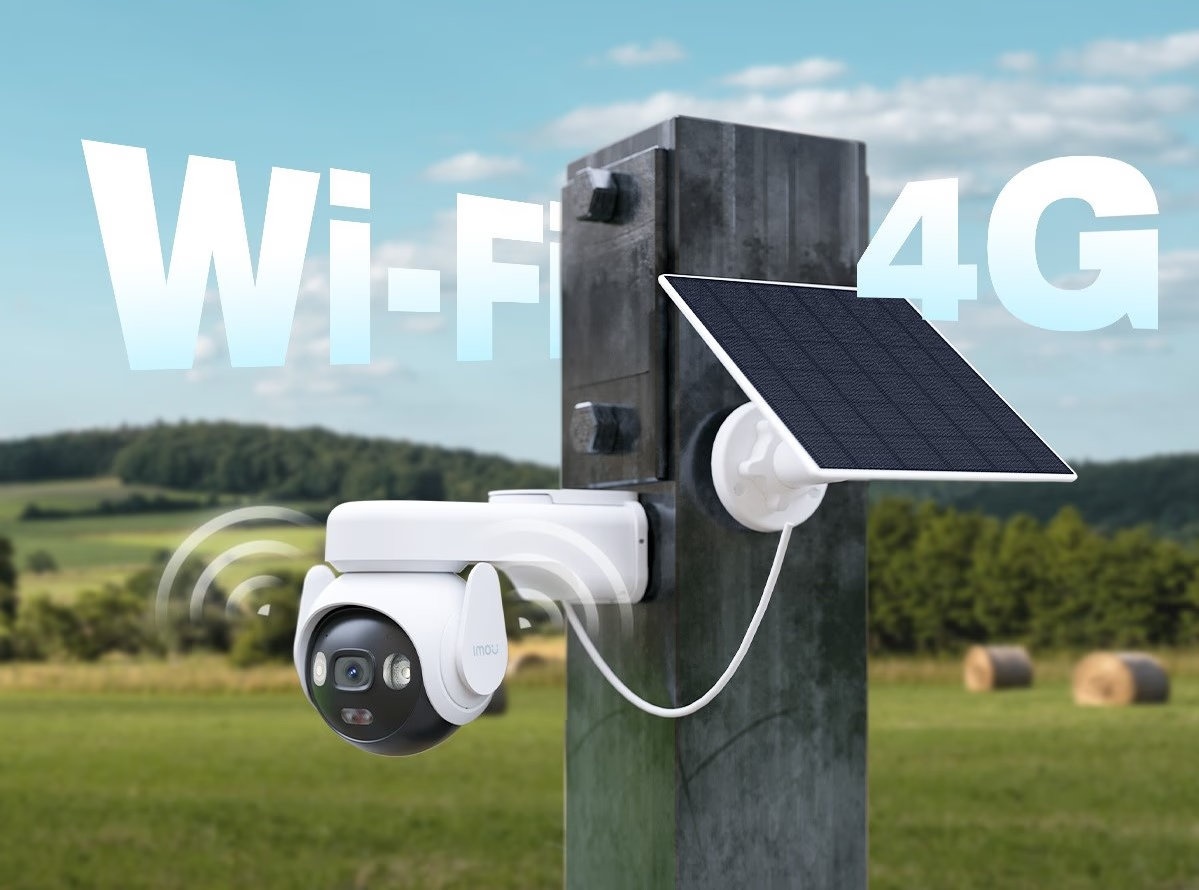
One of the most common solutions is the Imou AOV PT. It is a pan-tilt camera designed to operate as autonomously as possible. The camera uses AOV technology, which continuously captures images but does so in an energy-efficient way. When nothing significant is happening, it records at intervals. As soon as motion is detected, it immediately switches to full video recording.
This approach allows for very long battery life while still ensuring that important events are not missed. Combined with a 10,000 mAh battery and a solar panel, the camera can operate for a long time without needing manual recharging.
Imou AOV PT Dual
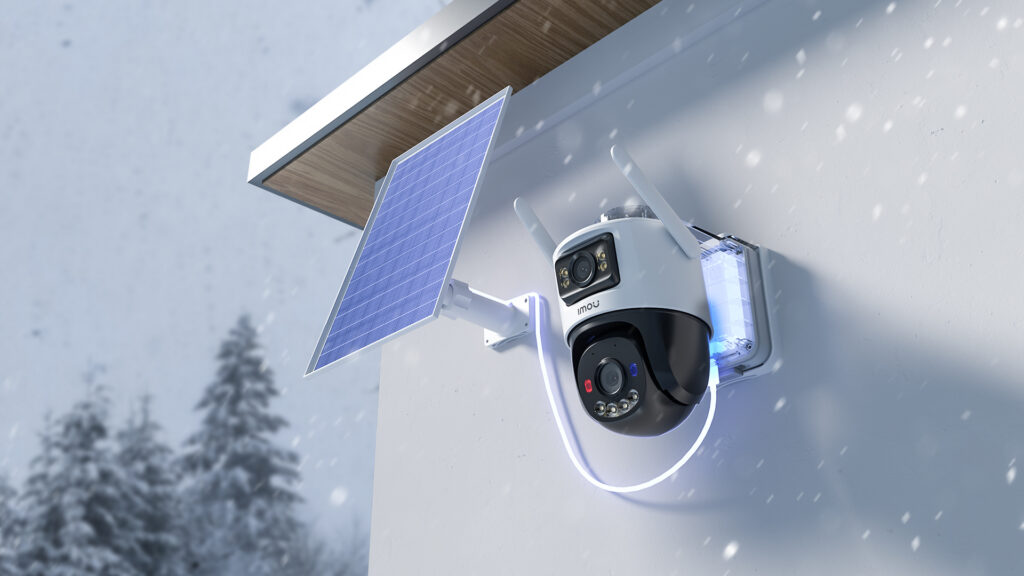
If you need more control and a wider overview, it is worth considering the Imou AOV PT Dual. The key difference is that this is not just one camera, but two cameras in a single device.
One lens provides a constant wide view, while the other is motorized and can track movement. In practice, this means that when the fixed camera detects motion, the PT camera can automatically turn in that direction and follow the object.
Another option is to use the two cameras independently. For example, one monitors the entrance while the other covers the yard. This allows a single device to cover a much larger area and helps avoid blind spots.
Smart features in everyday use
Modern cameras are no longer just about “image and recording.” These Imou models can distinguish between people and vehicles, which helps reduce false alarms. The camera does not react to every moving branch or raindrop, but focuses on what actually matters.
There is also automatic tracking, where the camera follows a moving object and keeps it in frame. Users can define detection zones, meaning notifications are only triggered when movement occurs in specific areas.
A practical feature is privacy mode. When someone is present on-site, there is no need to receive constant notifications about their own movement. This can be easily turned off with a single tap.
How do these cameras perform in Estonian weather?
The most common concern is winter. Is the solar panel enough when days are short and temperatures drop below zero?
Based on our experience, it usually is. We have tested these cameras in real conditions over the course of a full year. From spring to autumn, there was no need to charge the camera at all — the solar panel kept the battery fully charged.
Talvel olukord muutub. Kaamera töötab edasi, kuid väga madalatel temperatuuridel kulub osa energiast aku soojendamisele. Kui temperatuur langeb umbes –15…–20 kraadini ja samal ajal on päikest vähe, võib juhtuda, et laadimisest ei piisa täielikult.
In winter, the situation changes slightly. The camera continues to operate, but at very low temperatures, part of the energy is used to keep the battery warm. If temperatures drop to around –15…–20°C and there is little sunlight, charging may not fully cover consumption.
Storage and data usage – what to expect?
All recordings are stored on a microSD card inside the camera. There is no need to send data to an external server. Recordings can be viewed directly through the mobile app without removing the card.
The amount of storage used depends on how much movement occurs in front of the camera. For example, in front of our Delkatek office, where there is constant activity during working hours, a 32 GB card stored around two months of recordings. In quieter locations, it can last significantly longer.
As for mobile data, the logic is simple: data is mainly used when the user accesses the camera through the app. Frequent viewing means higher data usage. Occasional checks require only a small data plan, for example around 5 GB per month. If needed, the plan can easily be increased.
A solution that remains future-proof
Although these cameras operate via 4G, they also support Wi-Fi. This means that if internet becomes available at the location in the future, there is no need to replace the camera — simply connect it to Wi-Fi.
The cameras are also compact and easy to relocate. If the project ends or the location changes, the camera can simply be moved to a new place.
What does a camera actually provide?
It’s important to be honest — a camera cannot physically stop a theft, but it can act as a deterrent. If a theft does occur, the camera provides valuable information. It is possible to see exactly what happened, who was present, how many people there were, and how they moved. In many cases, it is even possible to identify the vehicle make or license plate.
When motion is detected, the camera sends a push notification to the phone. This allows real-time response — for example, checking the situation in the app or contacting the police if necessary.
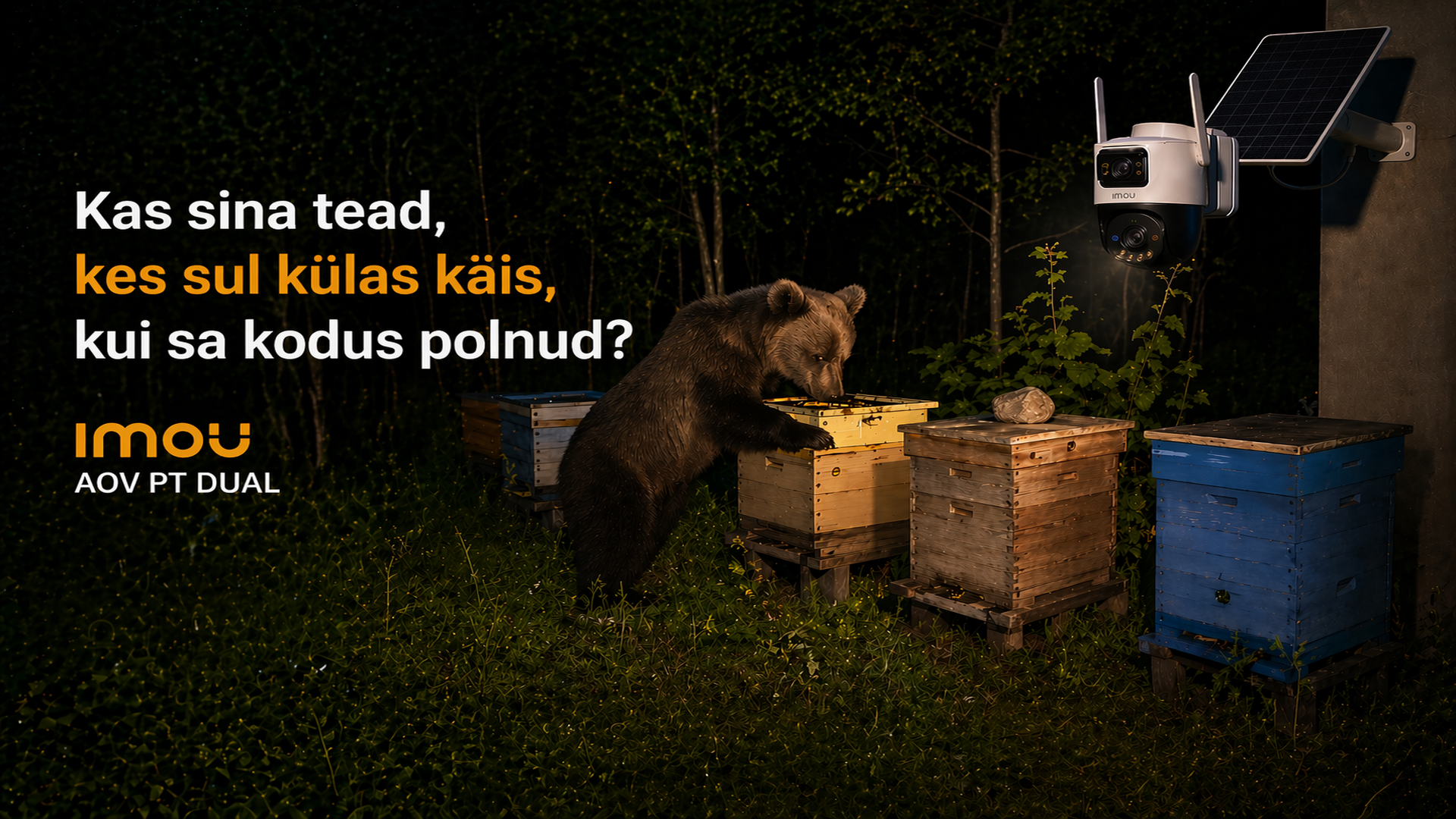
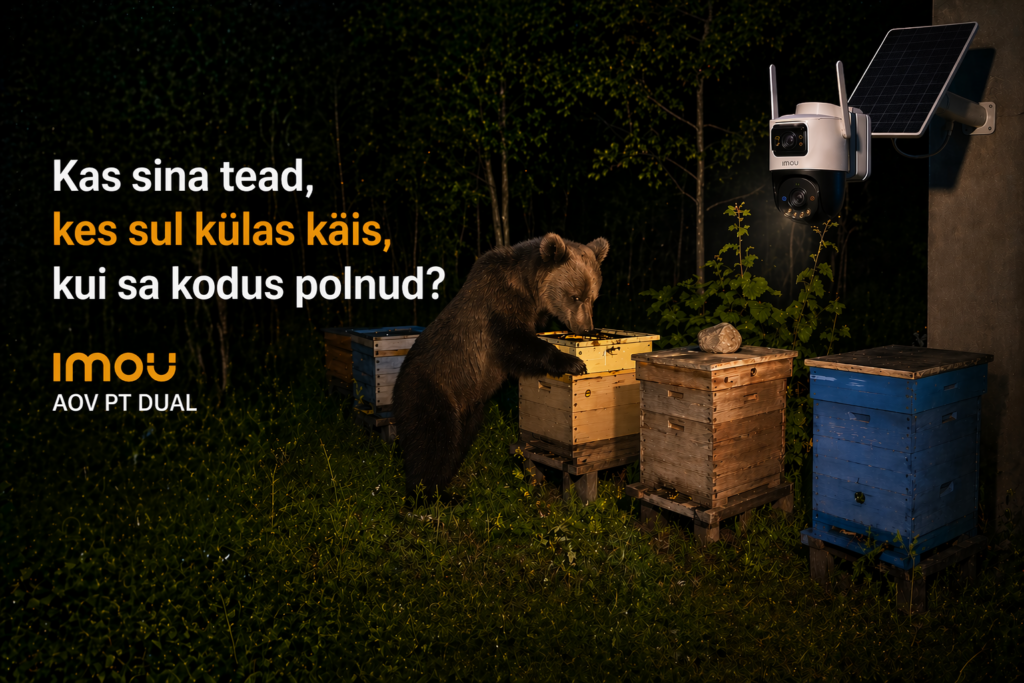
These cameras are not used only for security. Many people install them simply to see what happens when they are away. In some cases, cameras have captured wildlife — for example, one camera recorded a bear visiting beehives. Sometimes they are used just to observe nature or even watch the northern lights.
In summary
If you have a location where it is not possible or practical to install internet or electricity, it does not mean you have to give up on video surveillance. 4G cameras with batteries and solar panels are a practical and reliable solution, even in Estonian conditions.
The choice depends on your needs. For a simple and reliable setup, a single camera is enough. If you need more control and wider coverage, a dual-lens solution offers clear advantages.
Such a system does not require complicated installation, does not need constant maintenance, and does exactly what is needed — shows what is really happening on your property.
IMOU
-
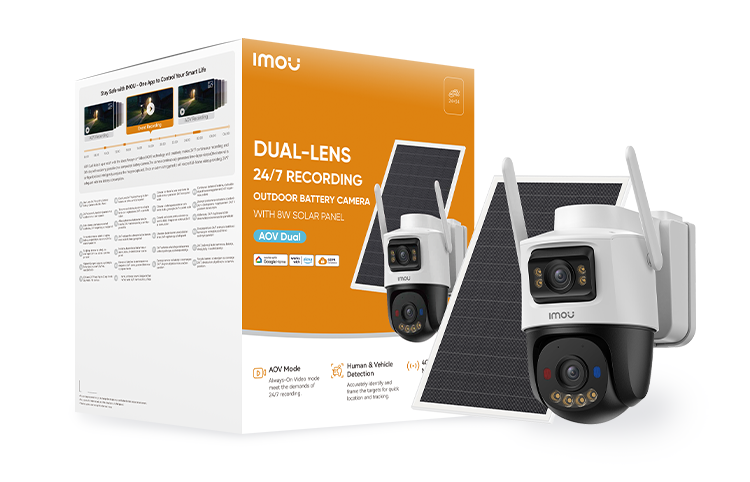
IMOU AOV DUAL 5MP + 5MP 4G + Wi-Fi pan-tilt security camera with battery and solar panel
206,46 €incl. VAT -
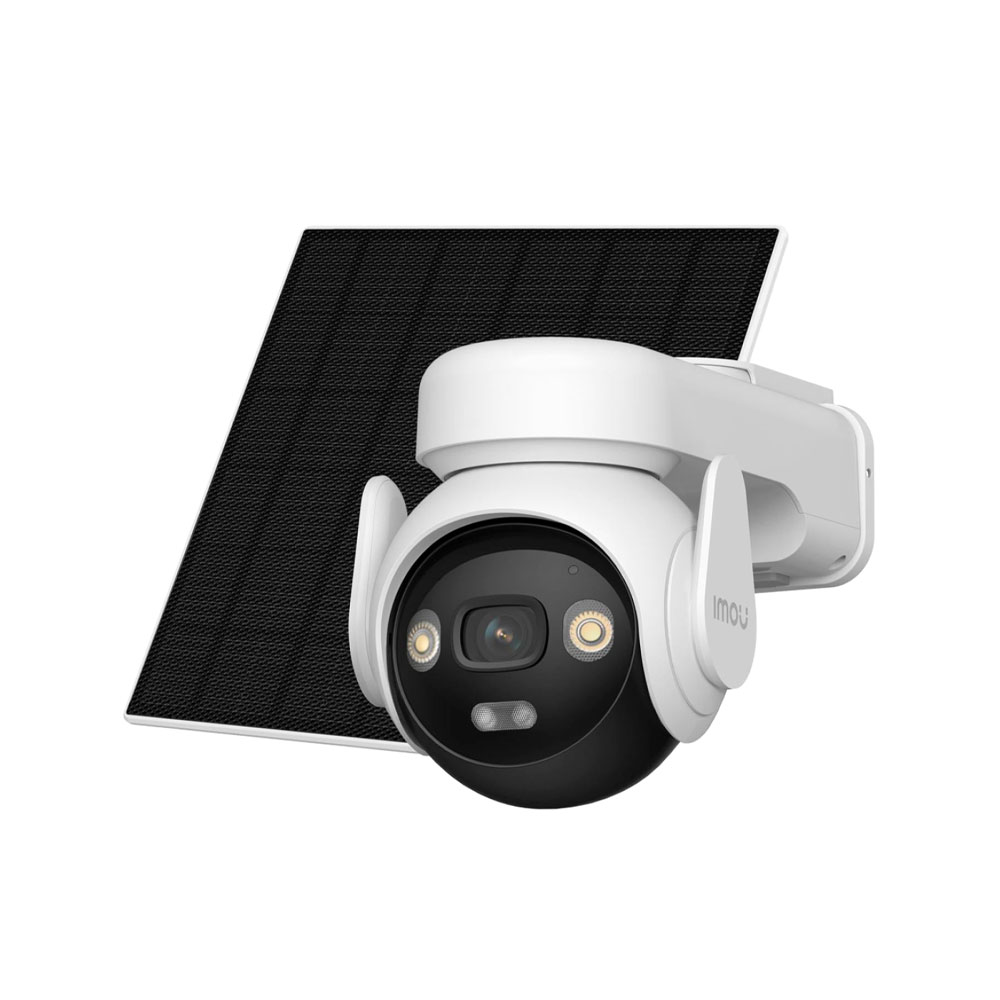
Imou AOV PT 5MP WiFi+4G PTZ Camera with Battery and Solar Panel
146,32 €incl. VAT -
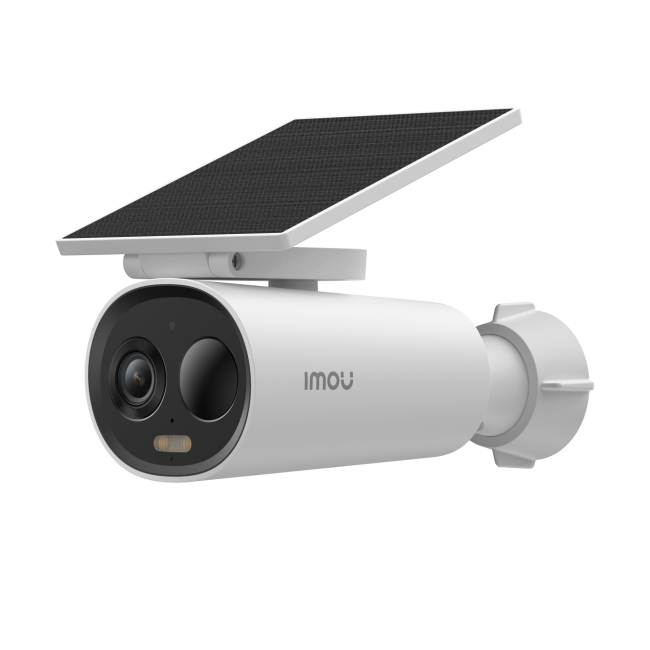
Imou Cell 3C 5MP IPC-K9DC-5M0WEH-V2 5MP with Battery and Solar Panel
68,20 €incl. VAT -
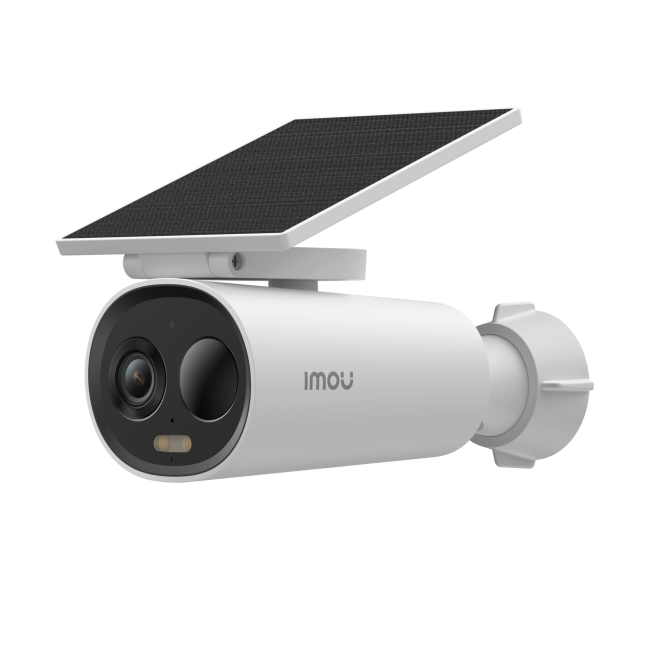
Imou Cell 3C IPC-K9DCP-3T0WE-V2 3MP with Battery and Solar Panel
49,60 €incl. VAT -
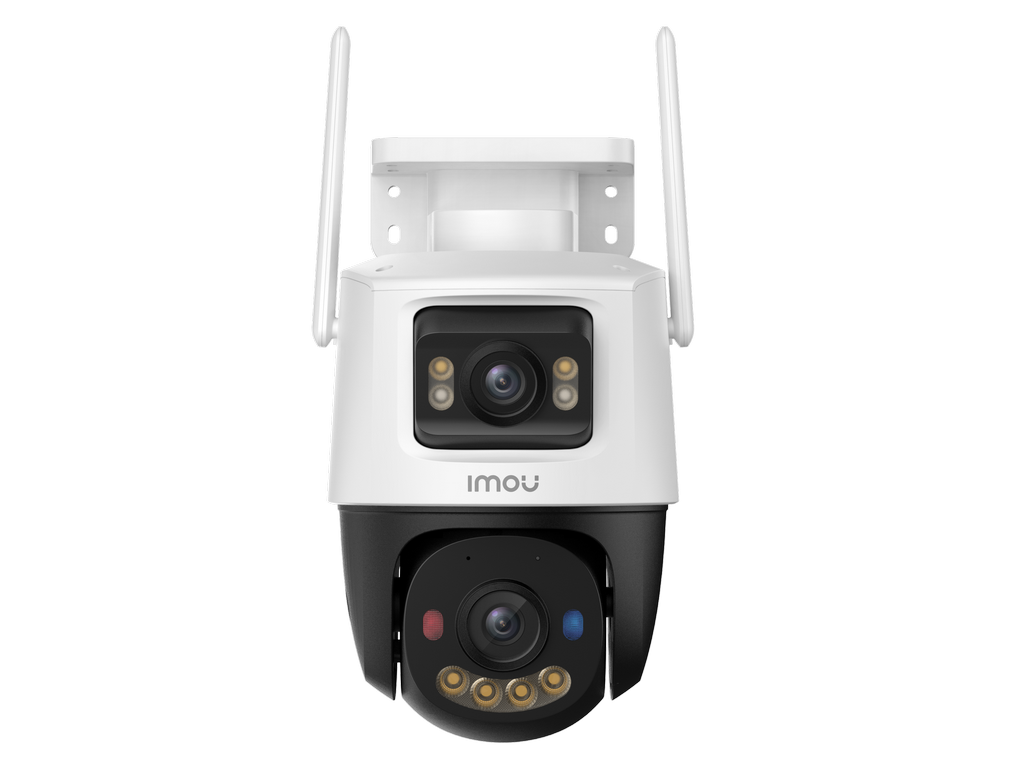
Imou Cruiser Dual 2C, 3+3MP IP 4G PT camera, Full-color
93,00 €incl. VAT -
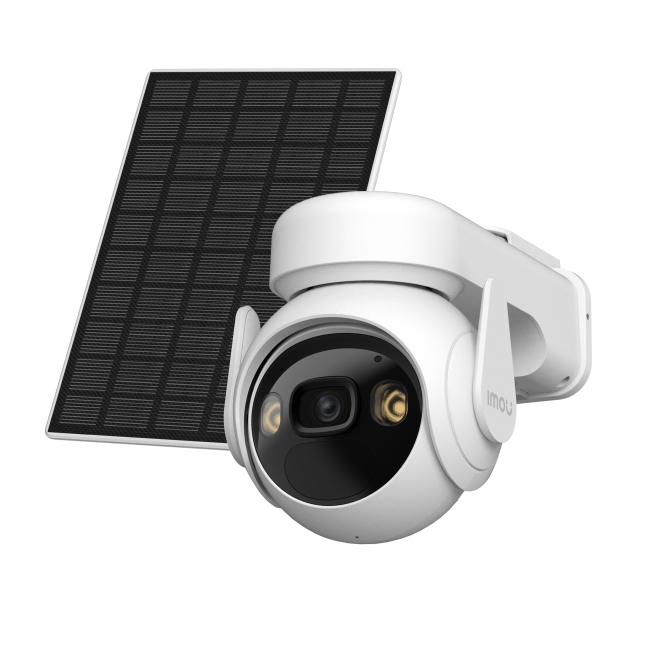
Imou Kit Cell PT Lite 3MP Wi-Fi PT Camera with Battery and Solar Panel
80,60 €incl. VAT